césar
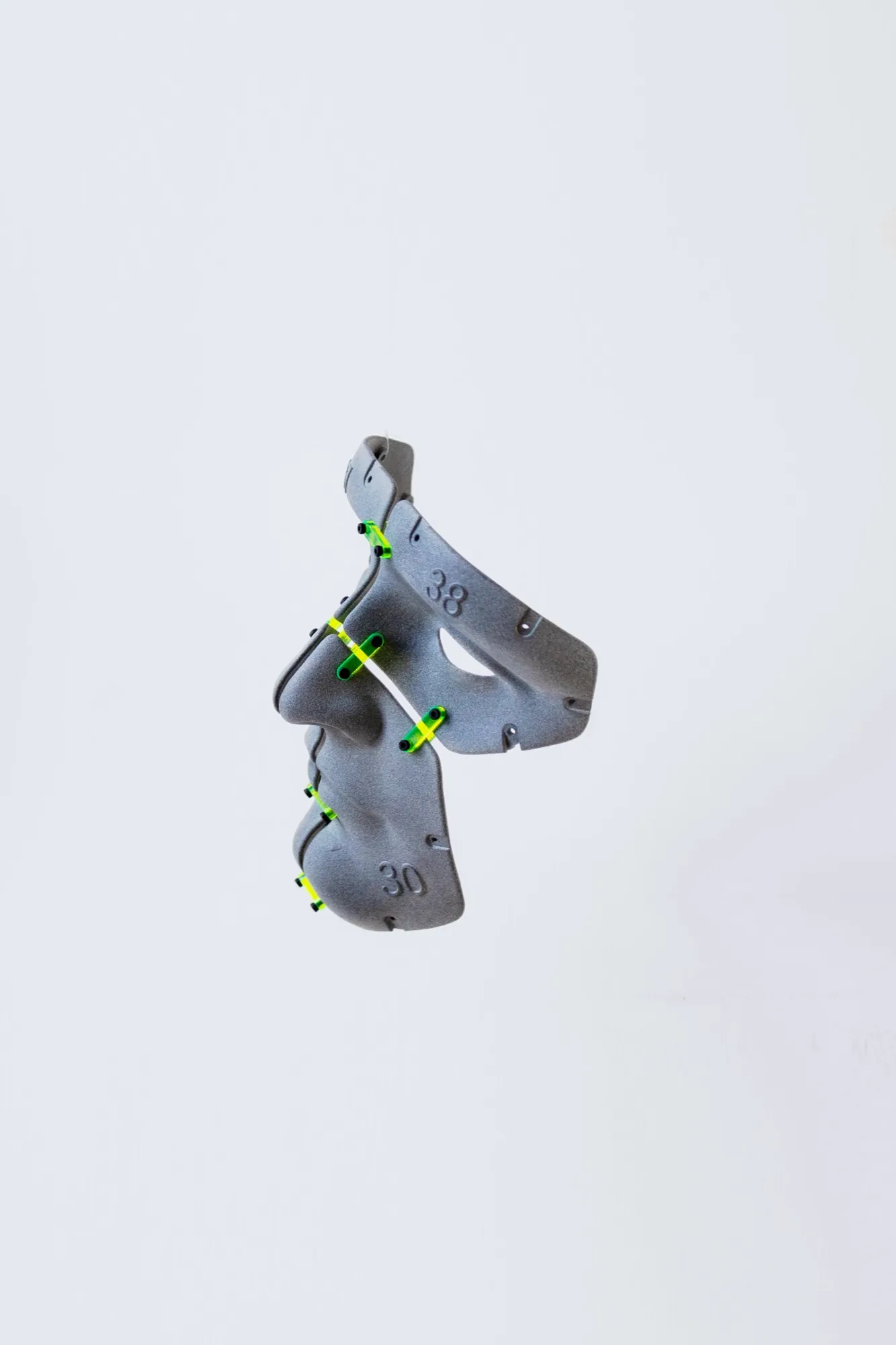
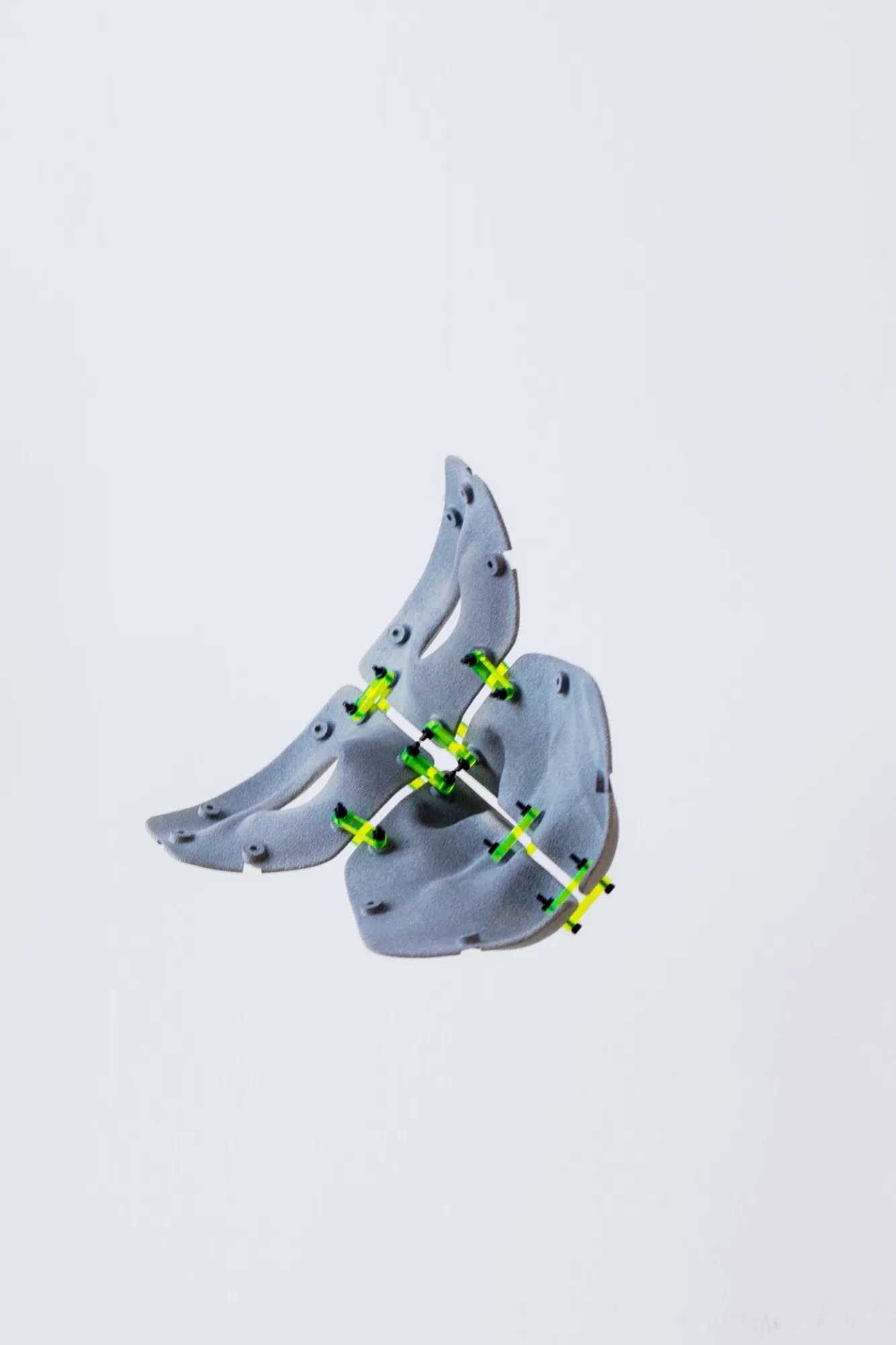
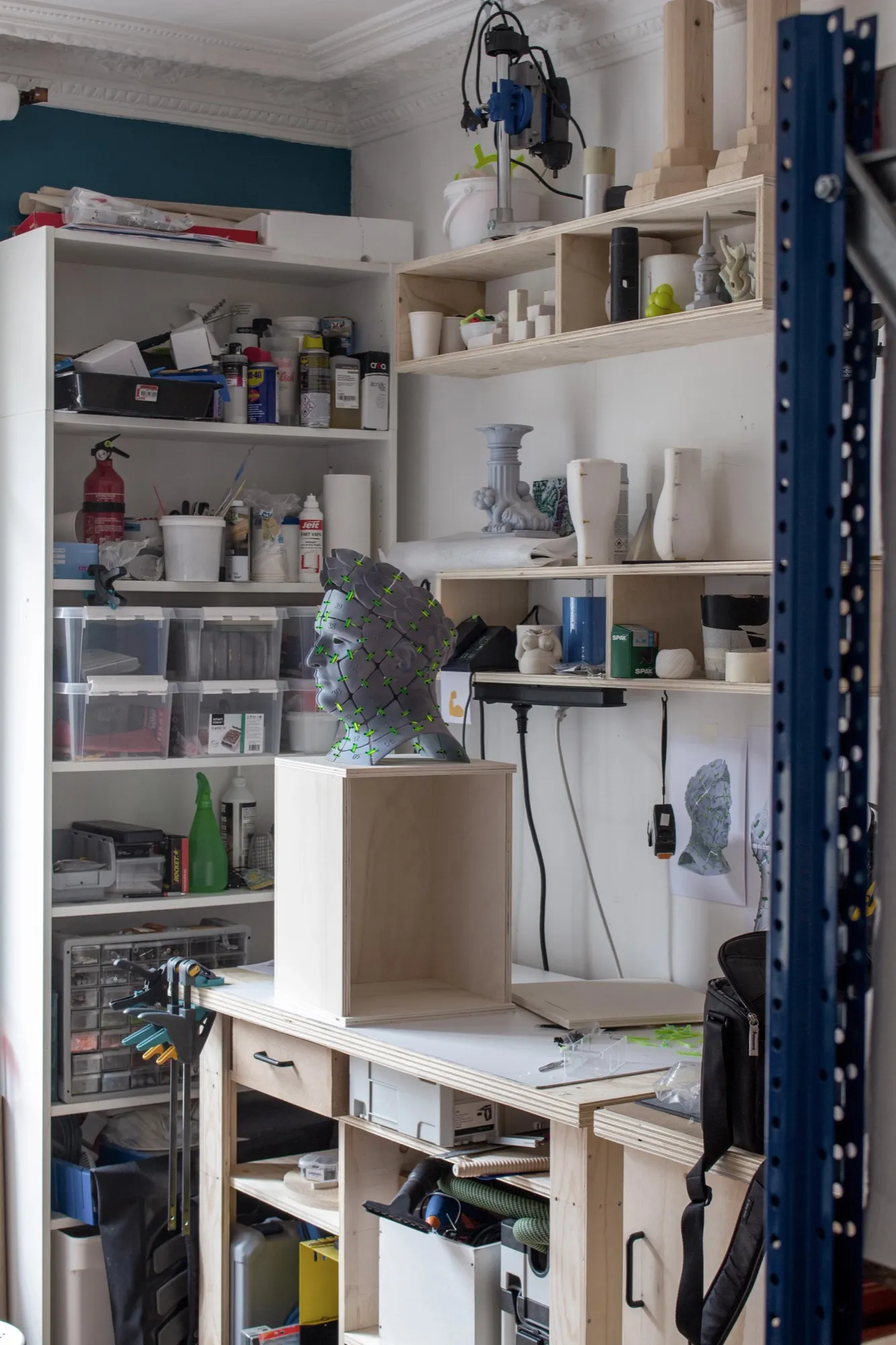
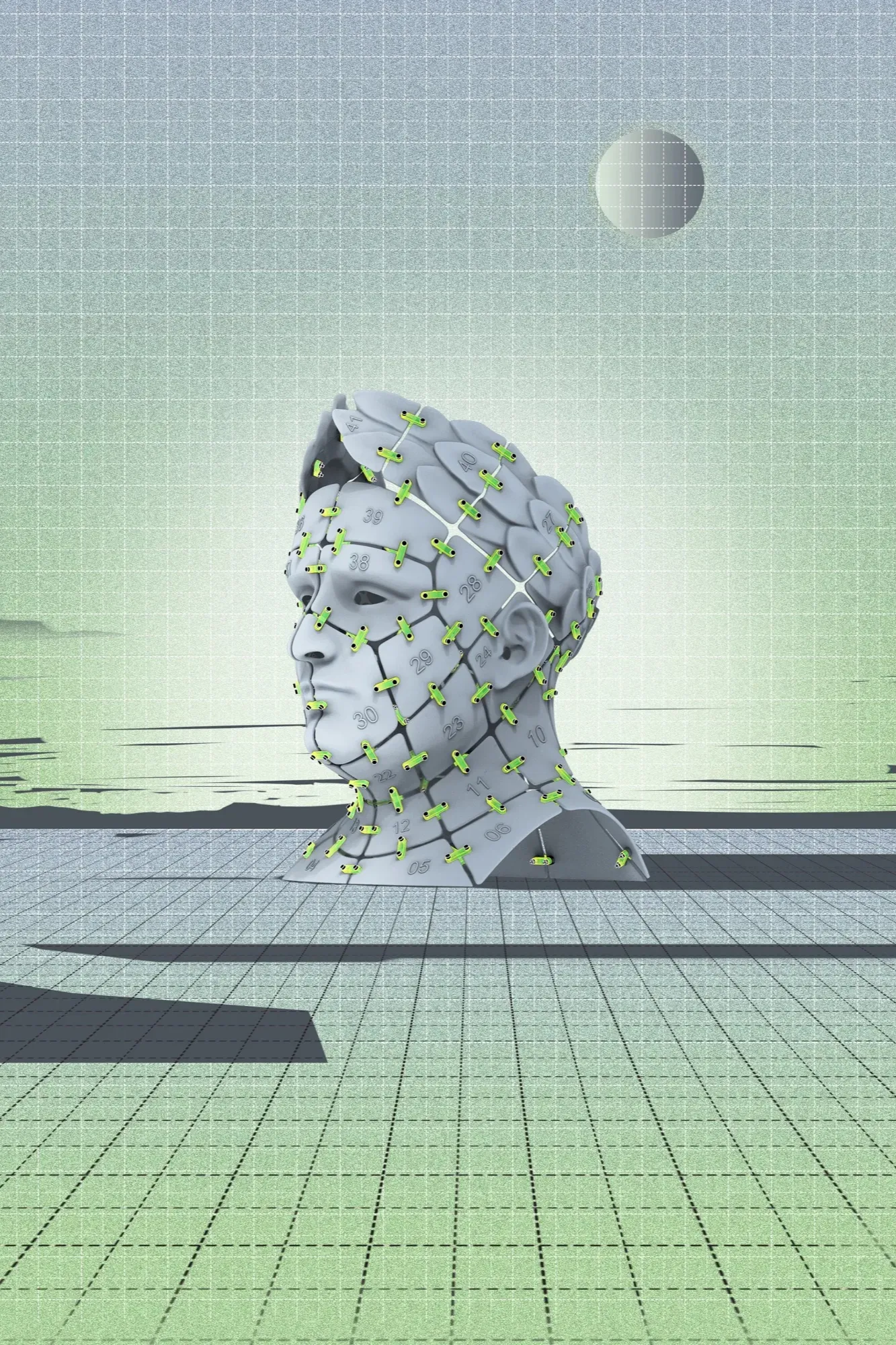
César is a contemporary revisits of the bust, a form historically associated with authority, permanence, and the heroization of power. Traditionally monolithic, solid, and closed, the bust here becomes an assembly of numbered plates, 3D-printed and held together by fluorescent PMMA connectors that make visible its seams.
The effigy no longer appears as a fixed block of authority, but as a montage: a face composed of fragments, and reconfigurable elements. César appears as a system, revealing that great historical figures are never definitive, but always subject to reinterpretation, reconstruction, and shifts in meaning.
César is neither a caricature nor a satire intended to ridicule the historical figure. Rather, it is a representational system that reinvents the typology of the interior bust—today heavily connoted—in order to restore lightness, both physical and symbolic. Fragmentation lightens the mass, opens the form, and introduces critical distance without irony.
The work deliberately cultivates ambivalence: some will see a homage, a patient construction of the figure; others will read a deconstruction, even a crisis of the authority it embodies. It is precisely this zone of indeterminacy that underpins the project. Decomposing the form enables this dual, simultaneous, and contradictory reading. Even the name César crystallizes this ambiguity. The name designates not a single character, but a continuity of power, an iconographic drift in which historical figures cite, copy, and rewrite one another.