vase n°1 et n°2
Vases No. 1 and No. 2 constitute my first attempts to explicitly reintroduce a contemporary narrative into ornament. They mark the emergence of a narrative neo-ornament, in which decoration ceases to be an abstract motif and once again becomes a space for symbolic projection.
Vase n°1
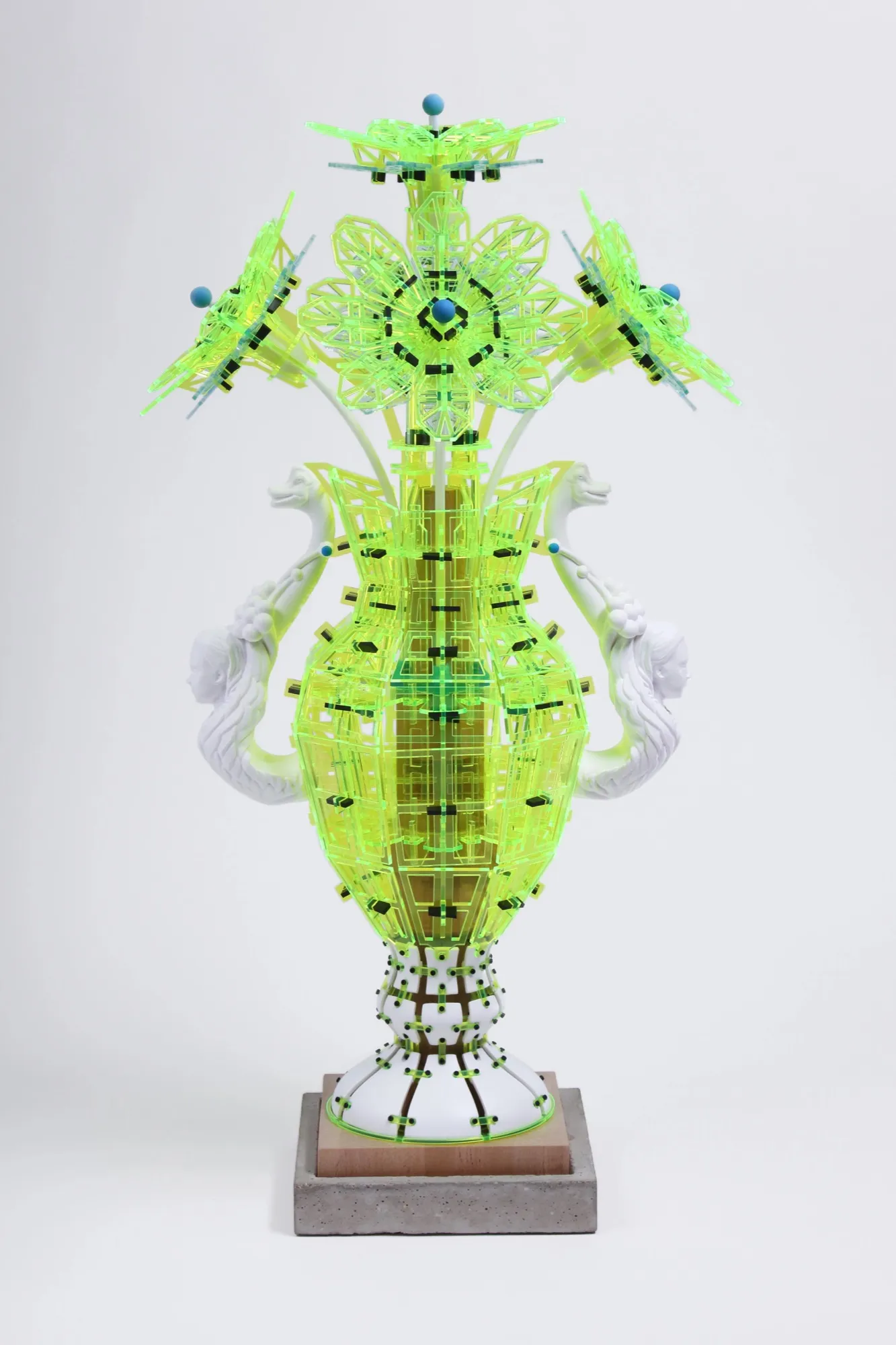
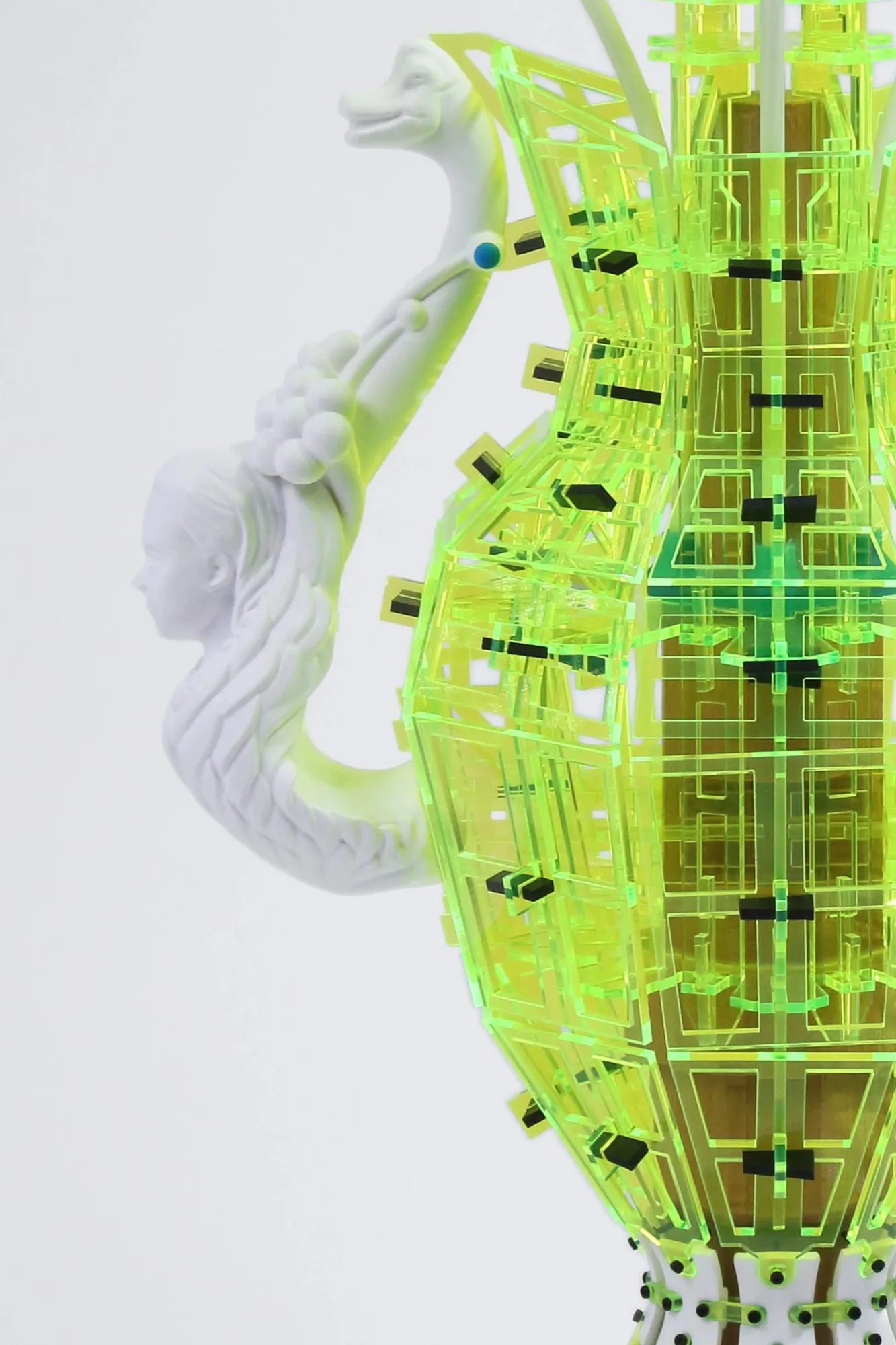
In Vase n°1, the sculpted handles depict a young Swedish environmental activist who has become an emblematic figure of the climate struggle. Set within a strictly symmetrical composition, she appears winged, surmounted by a protective dinosaur and surrounded by extraordinary plants. These handles extend the same narrative developed in Rocket Wallace: a contemporary figure elevated to the status of allegory.
The body of the vase, meanwhile, claims its technicality as a form of ornament in itself. Assemblies, fixings, and materials are left visible, assumed, transformed into décor. The ensemble thus draws an ambivalent portrait of our contemporary society: ultra-technological, plastic, industrial, yet carrying a strong ecological discourse. Vase n°1 marks my first attempt to translate contemporary narrative intuitions into ornament.
Vase n°2
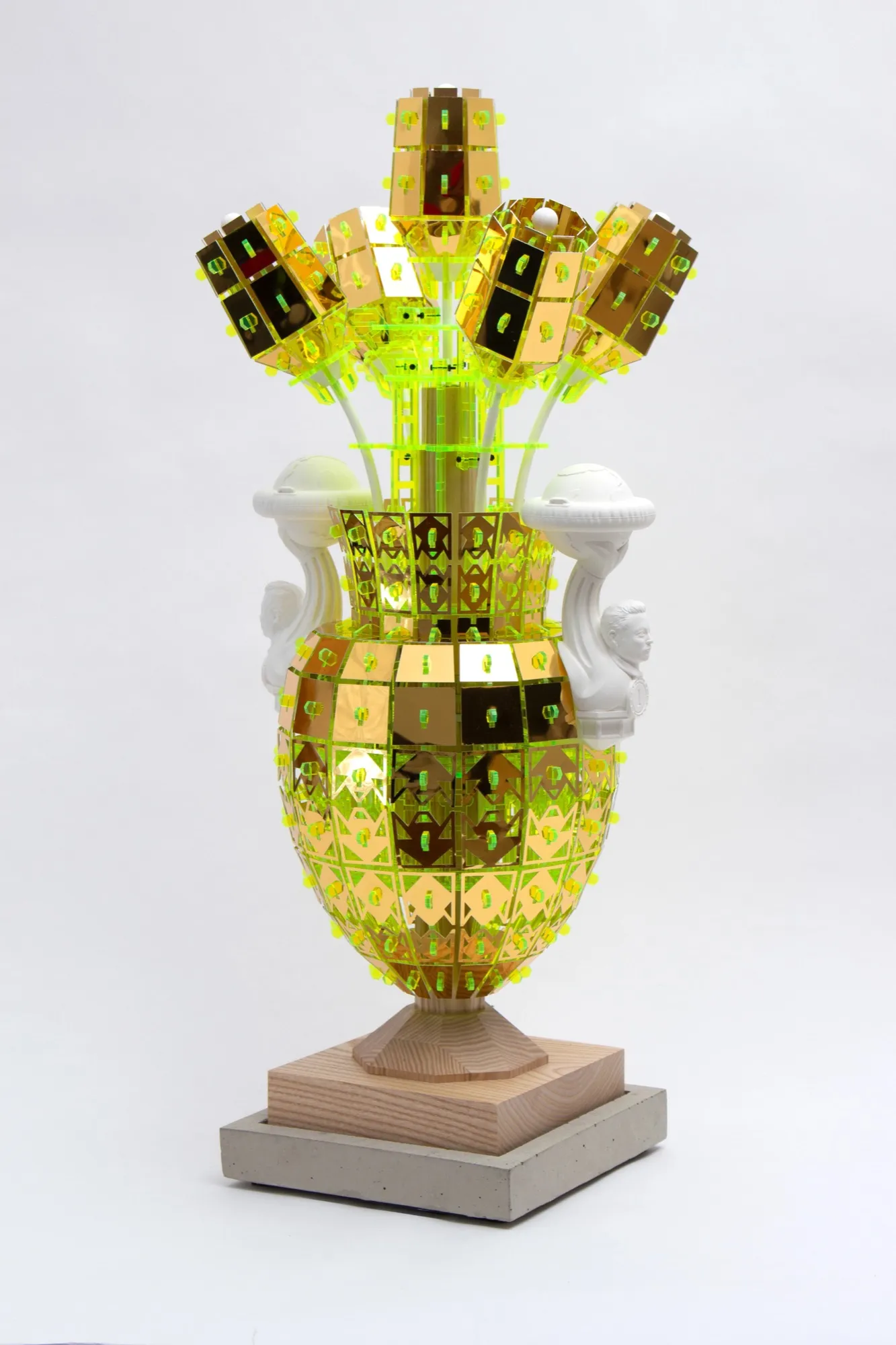
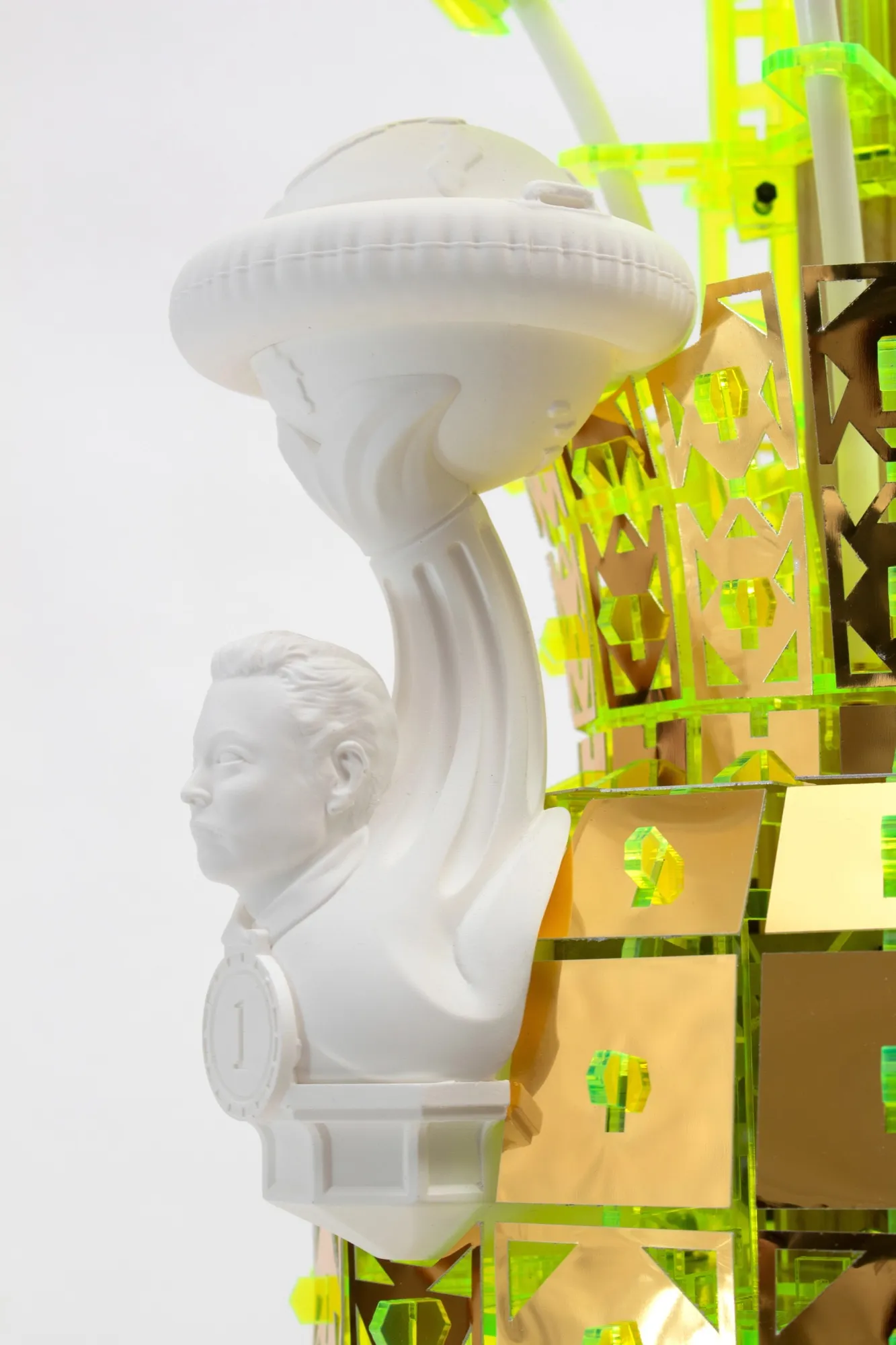
Vase n°2 is based on the same formal principle but introduces a different narrative. The handles this time depict a famous South African entrepreneur and flamboyant rocket launcher, whose portrait crowns the body of a sea lion. He proudly wears a medal stamped with the number 1, while balancing atop his head a planet encircled by a life buoy. This image functions as a direct allegory of the danger of treating the planet as a playful object—a pool toy manipulated without regard for consequences.
The Swedish activist and the South African billionaire embody, for me, the two extremes of the same line—two radically opposed responses to a same question: What narrative should be proposed when the Earth appears as a fragile ecosystem? Flee to Mars, or renounce modern comfort in an attempt to repair what already exists?
It is precisely because of their polarizing nature that I chose these figures. They allow me to embed narratives within décor—discreet stories integrated into ornament, visible only to those who take the time to read them. Like messages to future archaeologists. In Vase n°1 and Vase n°2, ornament becomes a narrative and symbolic language, rooted in the present and free of empty pastiche.