wallace rocket
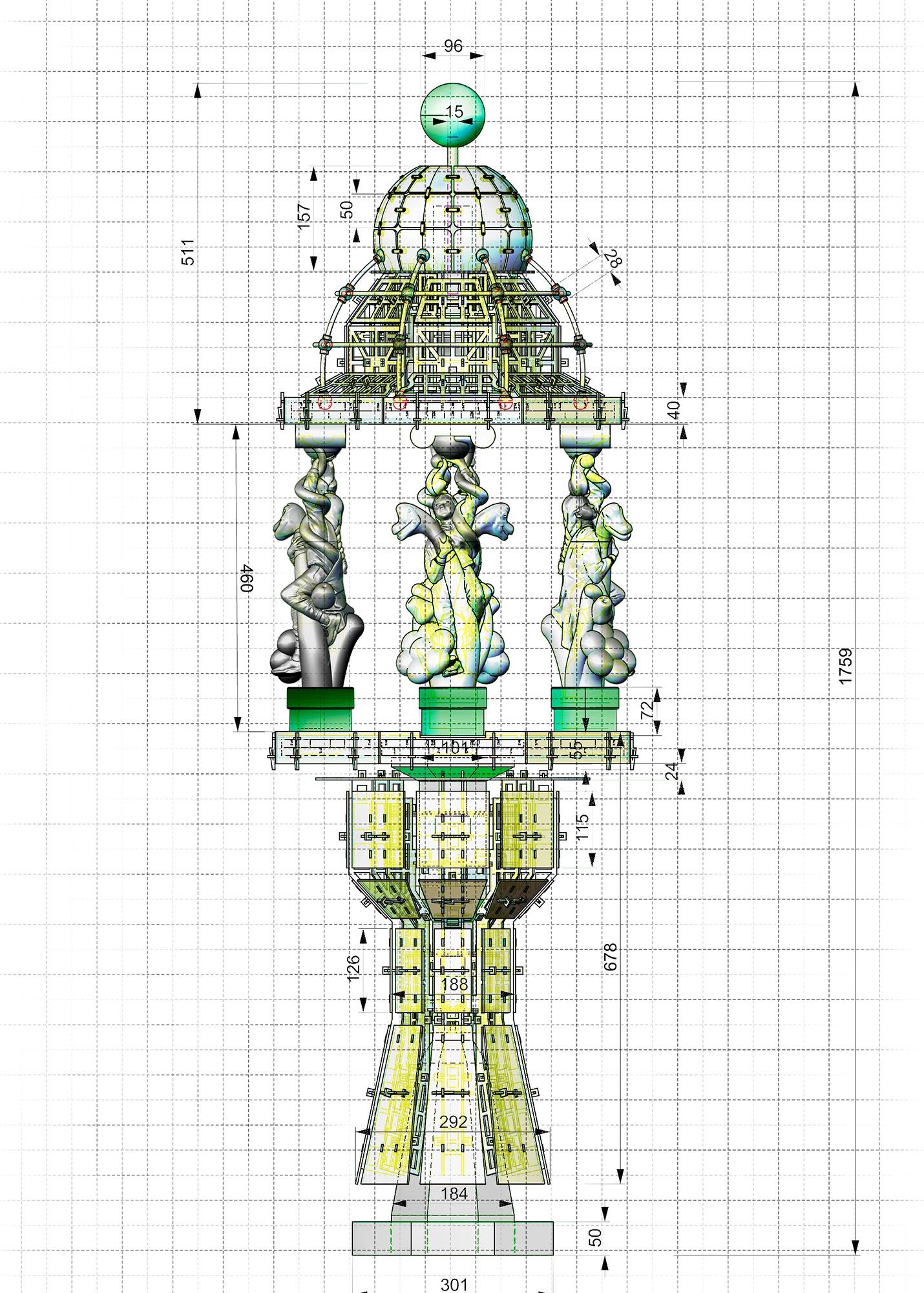
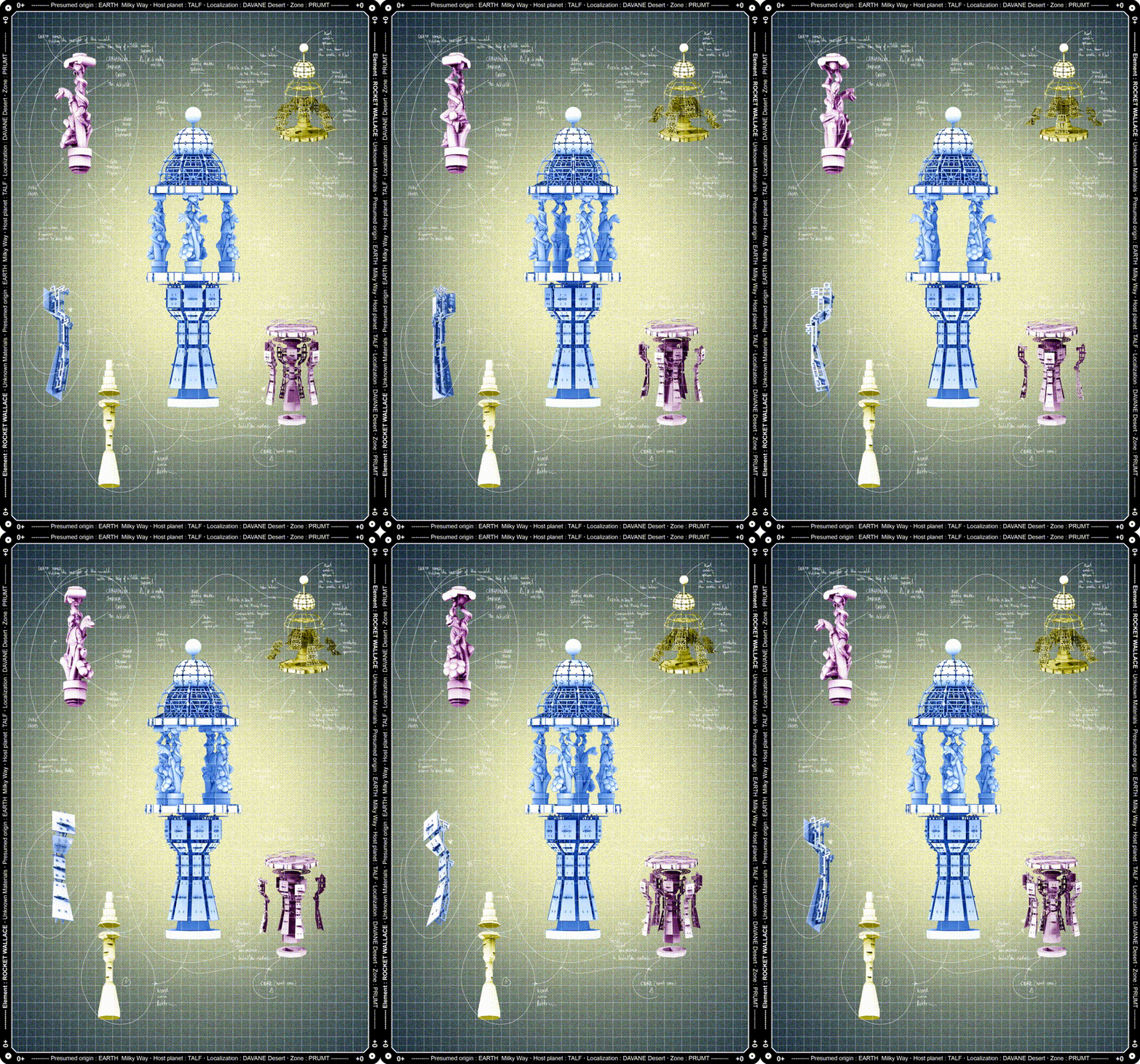
Wallace Rocket is a contemporary reinterpretation of the Parisian Wallace fountain. Transformed into a techno-ornamental vessel, its dome is carried by four caryatids, bearing the likeness of a well-known young Swedish environmental activist. Each was sculpted in 3D, printed, then molded in resin. The rest of the piece consists of millimetric assemblies of wood, steel, and PMMA.
Within his work, Geoffrey Hillereau juxtaposes so-called “noble” materials with resin and plastics, according to a deliberately paradoxical logic: derived from fossil energies destined to disappear, these materials will tomorrow become rarities, and their quasi-indestructible nature—criticized today in a throwaway culture—will then guarantee a form of true permanence.
The caryatids are almost the starting point of Wallace Rocket. The desire to reinterpret the iconic Parisian Wallace fountain arose precisely from the surface for rewriting offered by this motif. Bearing the dome in the original fountain, they became here the ideal support for a more contemporary narrative. In continuity with Rocket Fabergé and Vase n°1 and Vase n°2, Wallace Rocket stands as a rereading of an icon of the decorative arts, crossed with contemporary references—symbolic, narrative, and technical.
Each caryatid depicts a young environmental figure, holding the world at arm’s length, supported by a fragile squirrel and perched atop the sinuous back of a dinosaur. She relies on the contradictory forces that have carried us this far: fossil energies—their power and their impasses. A contemporary allegory of effort, paradox, and transition, this figure synthesizes the tension between what we must overcome and what still supports us.
The choice of resin for these caryatids is both symbolic and material. The figure embodies our dependence on fossil energies—forces that have carried us far while now constraining us. Shaping it in a material directly derived from those same resources creates immediate coherence: matter becomes the literal expression of the paradox it represents.
Resin also introduces the question of permanence. Bronze can be melted down
in wartime, wood burns, marble breaks. Plastic, by contrast, persists. This persistence—problematic in a throwaway culture—becomes an advantage within a logic of preservation. When the exploitation of fossil resources comes to an end, plastic may appear not as waste, but as one of the last truly durable materials of this era.